Why Patching and Credentials Aren't Enough: Lessons from Itron and FIRESTARTER
Security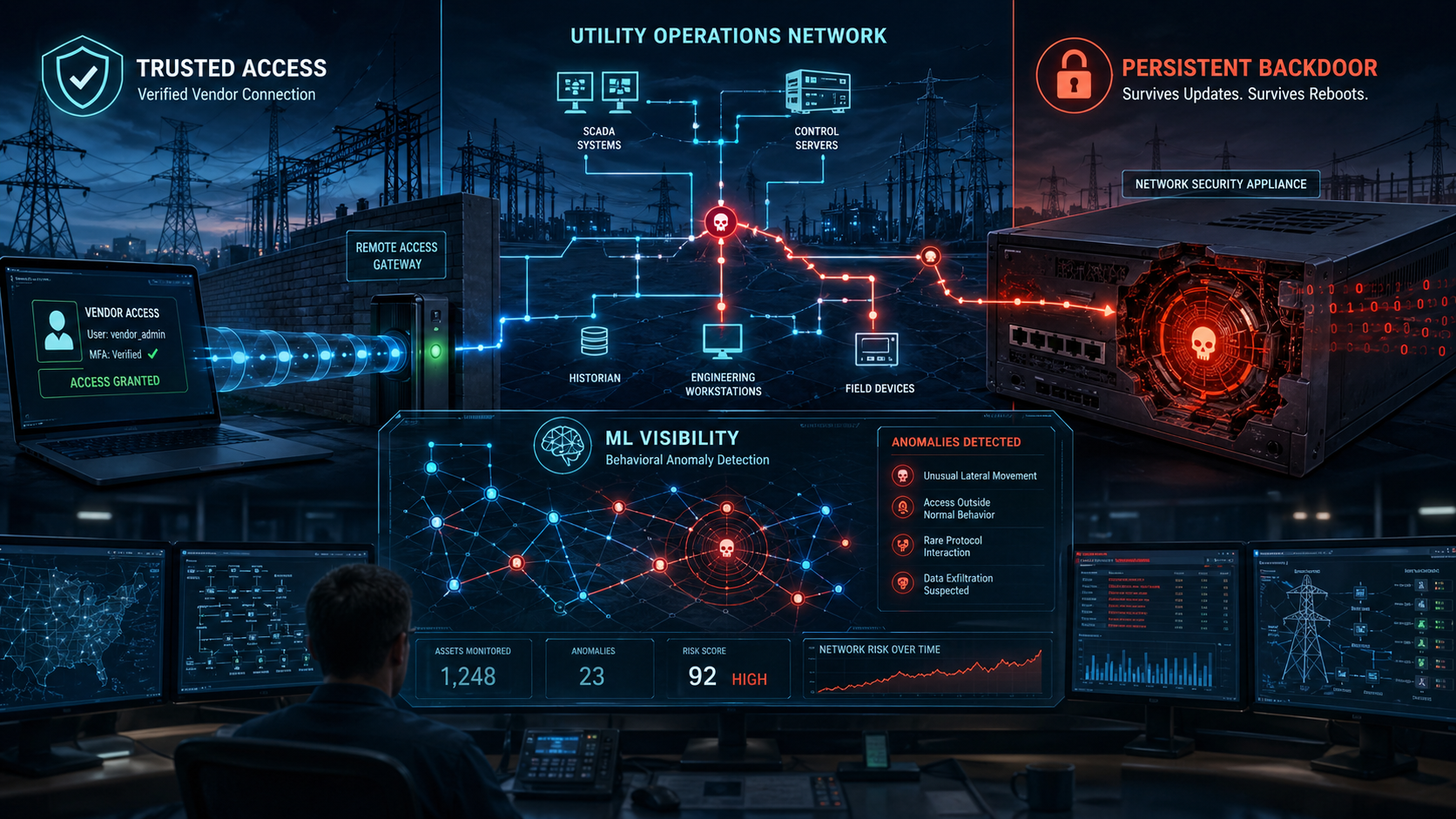
The recent headlines from the last few days of April 2026 have created a "perfect storm" for US grid operators. Between the Itron 8-K filing and CISA’s advisory on the FIRESTARTER malware, the industry is being forced to confront two uncomfortable truths about the limits of traditional security.
These two events represent a fundamental shift in how we must approach critical infrastructure protection.
1. The Itron Breach: The Risk of "Trusted" Pathways
On April 24, Itron disclosed that unauthorized actors gained access to their corporate IT systems. While they’ve stated that customer-hosted systems remain unaffected, the implications for the utility sector are significant.
In the energy world, vendors like Itron are effectively part of the network. They hold the credentials, VPN configurations, and maintenance access required to keep the grid running.
The Takeaway: Traditional security assumes that if a user has the right credentials, they belong there. But when a vendor’s corporate environment is compromised, those credentials become a "legitimate" way for attackers to walk through the front door. We have to stop trusting the identity and start monitoring the behavior of every connection.
2. FIRESTARTER: Why Patching is Not a Strategy
The same day as the Itron filing, CISA revealed a new threat called FIRESTARTER. This is a persistent backdoor targeting Cisco ASA and Firepower devices—the very hardware often used to secure the perimeter.
What makes FIRESTARTER unique is its resilience. It exploits vulnerabilities like CVE-2025-20333 to get in, but once it’s there, it hooks directly into the device's core processing engine.
• It survives firmware updates: You can patch the vulnerability, and the malware remains.
• It survives reboots: Unless you physically pull the power cord (a "hard power cycle"), it stays active.
The Takeaway: If a threat can survive a patch and hide below the operating system, your "security to-do list" is broken. You can't patch your way out of a persistent backdoor.
The Shift to ML-Driven Visibility
These incidents prove that the perimeter is no longer a wall. If an attacker uses a trusted vendor’s credentials to install a persistent backdoor that ignores patches, your firewall will tell you everything is "Normal."
This is why ML-driven anomaly detection is moving from a luxury to a baseline requirement. We need to be looking for the subtle indicators that don't show up on a checklist:
• A "trusted" vendor connection scanning the network at an unusual time.
• A firewall device sending out "magic packets" that weren't part of its original configuration.
• Subtle changes in network traffic that indicate a backdoor is "calling home."
The 2026 threat landscape is telling us that visibility is the only real defense. It’s no longer about keeping the bad guys out; it’s about knowing exactly what is happening inside your network, regardless of whose credentials are being used.