The "Operational Blindness" Crisis: Why Grid Defense in 2026 is No Longer a Prevention Game
Security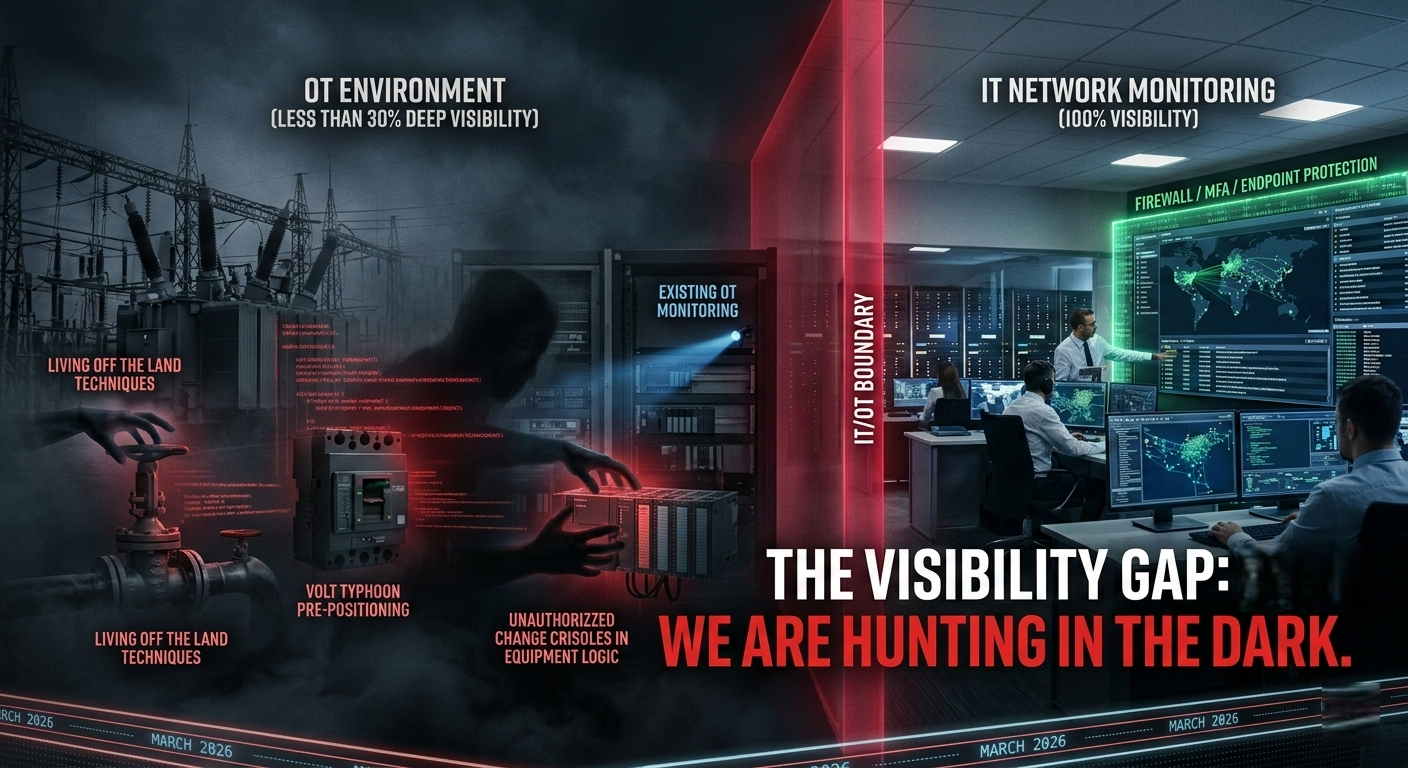
If your LinkedIn feed is a sea of generic "stay safe" advice, here is the data that actually matters for grid operators and utility executives this week.
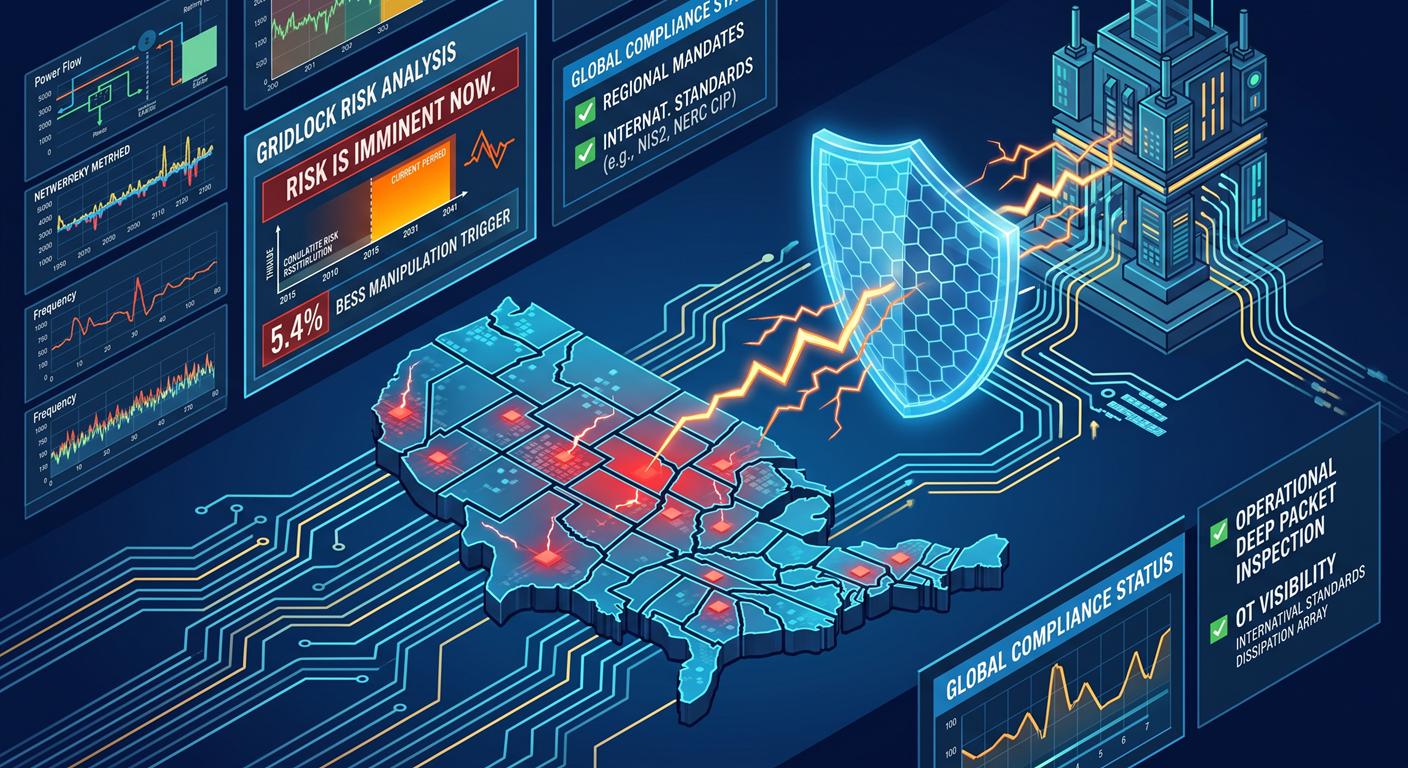
The first quarter of 2026 has confirmed a fundamental shift in the threat landscape. We are moving from the era of "cyber espionage" to the era of "Operational Pre-positioning."
1. The Targeting Spike: Energy is the New Front Line
According to recent threat intelligence, the energy and utilities sector now accounts for 43% of all observed APT campaigns globally - nearly triple the rate from 2024.
More concerning is the methodology. We are seeing a move away from standard ransomware toward "brick-and-mortar" disruption. Just this month (March 2026), reports have surfaced of Iranian-linked groups like Seedworm using the "Dindoor" backdoor to infiltrate oil and gas supply chains. Meanwhile, pro-Russia groups like Z-Pentest have claimed active breaches of SCADA systems across North America.
2. The Visibility Gap: We Are Hunting in the Dark
The most striking statistic from the Dragos’ 2026 OT Cybersecurity Year in Review is this: While most utilities have 100% visibility into their IT networks, less than 30% have any deep visibility into their OT environments. Even more alarming: 56% of operators cannot see below the IT/OT boundary. In an interconnected grid, this is a strategic vacuum. If an attacker bypasses the perimeter, they enter a "dark zone" where their movements are invisible until a physical process fails.
3. Why Prevention is No Longer Enough
Standard "prevention" tools - MFA, firewalls, and endpoint protection - are mechanical necessities, but they are insufficient against "Living off the Land" (LotL) techniques.
When actors like Volt Typhoon use legitimate administrative credentials to move through a network, they aren't "breaking in"; they are walking in with a key. A firewall cannot block a valid command to open a circuit breaker or change a valve setpoint.
4. The Pivot to Operational Anomaly Detection
To defend the grid in 2026, we must stop looking for "malware" and start looking for operational anomalies.
In an OT environment, a cyber attack rarely looks like a computer virus. It looks like:
• A pump running outside its duty cycle.
• A PLC being polled at 3:00 AM for the first time in months.
• A sudden, unauthorized change in a control loop logic.
This is where Machine Learning (ML) becomes the primary defensive tool. By establishing a high-fidelity baseline of "normal" physics and network behavior, ML can identify the "weird" activity that precedes a shutdown. It's about detecting the pre-positioning - catching the intruder while they are still mapping the control loops, not after the power goes out.
5. The Regulatory Hammer: NERC CIP 2026
The regulators have caught on. The NERC CIP 2026 Roadmap explicitly signals the end of "perimeter-only" defense. The new mandate is Internal Network Security Monitoring (INSM).
Whether you are a major IOU or a small municipal utility, the expectation is shifting: You must be able to prove you are monitoring the internal behavior of your OT assets, not just the locks on the front door.
6. The $250 Million "Muni" Lifeline
For the municipal and rural utilities that form the backbone of localized resilience, help has arrived. Last week, the House Energy and Commerce Committee unanimously passed H.R. 7266 (the Rural and Municipal Utility Cybersecurity Act), reauthorizing $250 million in grants through 2030.
The takeaway for 2026: Use the funding to close the visibility gap. Don't just buy a better lock; buy the eyes to see who is already inside the house.
The grid is a physical machine. It’s time our cybersecurity started treating it like one.