The Fast16 Discovery: A Reminder that Data Integrity is the Real Grid Challenge
Security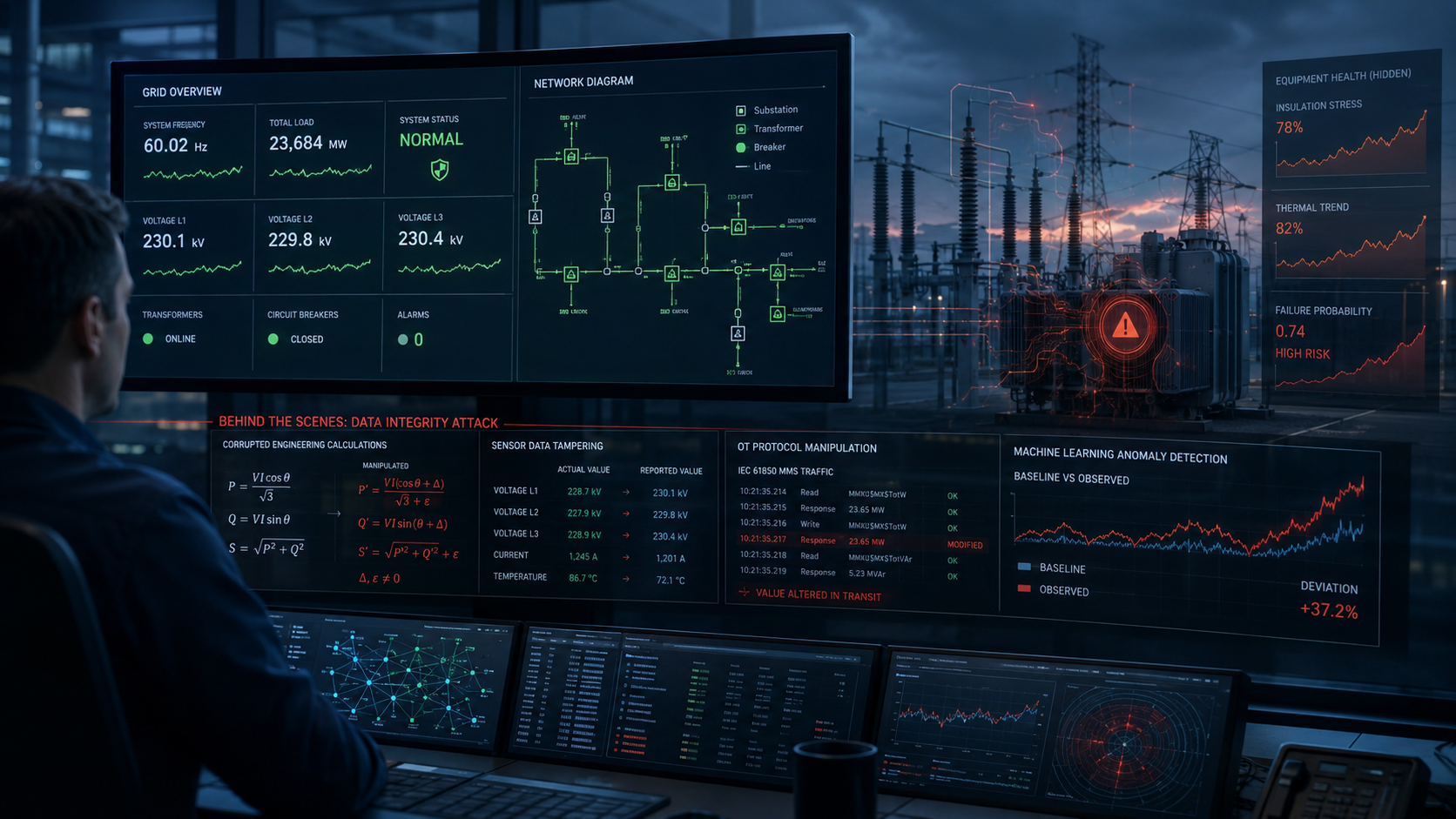
Researchers recently uncovered a sophisticated, pre-Stuxnet malware framework named Fast16. Dating back to roughly 2005, it was designed to stay hidden within industrial environments specifically to mess with engineering calculations. Instead of crashing a system, it introduced small, systematic errors into the math engineers rely on to design and operate physical systems.
This discovery is a necessary reminder for the energy sector. While much of the conversation around grid security focuses on "keeping the lights on" (availability), Fast16 highlights a quieter and potentially more damaging threat: the loss of data integrity.
In simple terms, Fast16 wasn't designed to crash a system immediately. It was built so that the work being done - the actual physics and engineering of the grid - would be wrong without anyone knowing. This is the nightmare scenario for an operator: your sensors and dashboards say the voltage is stable and the equipment is healthy, while the physical hardware is actually being pushed toward a failure point based on manipulated data.
Standard security measures often miss these types of integrity attacks because, on the surface, the network appears to be functioning normally. To catch these deviations, we have to look deeper than just whether a device is "up" or "down."
True resilience in the power industry requires a focus on two specific areas:
• Protocol-Level Visibility: Understanding exactly what your OT devices are saying to one another at the command level.
• Behavioral Baselines: Using Machine Learning (ML) to identify when a device begins to act outside of its normal operating parameters, even if it hasn't failed yet.
The goal isn't just to prevent a shutdown; it’s to ensure that the data we use to manage the grid is actually the truth. As we continue to modernize our infrastructure, monitoring for these subtle network anomalies and vulnerabilities is a core requirement for staying ahead of attackers who prefer to work in the shadows.