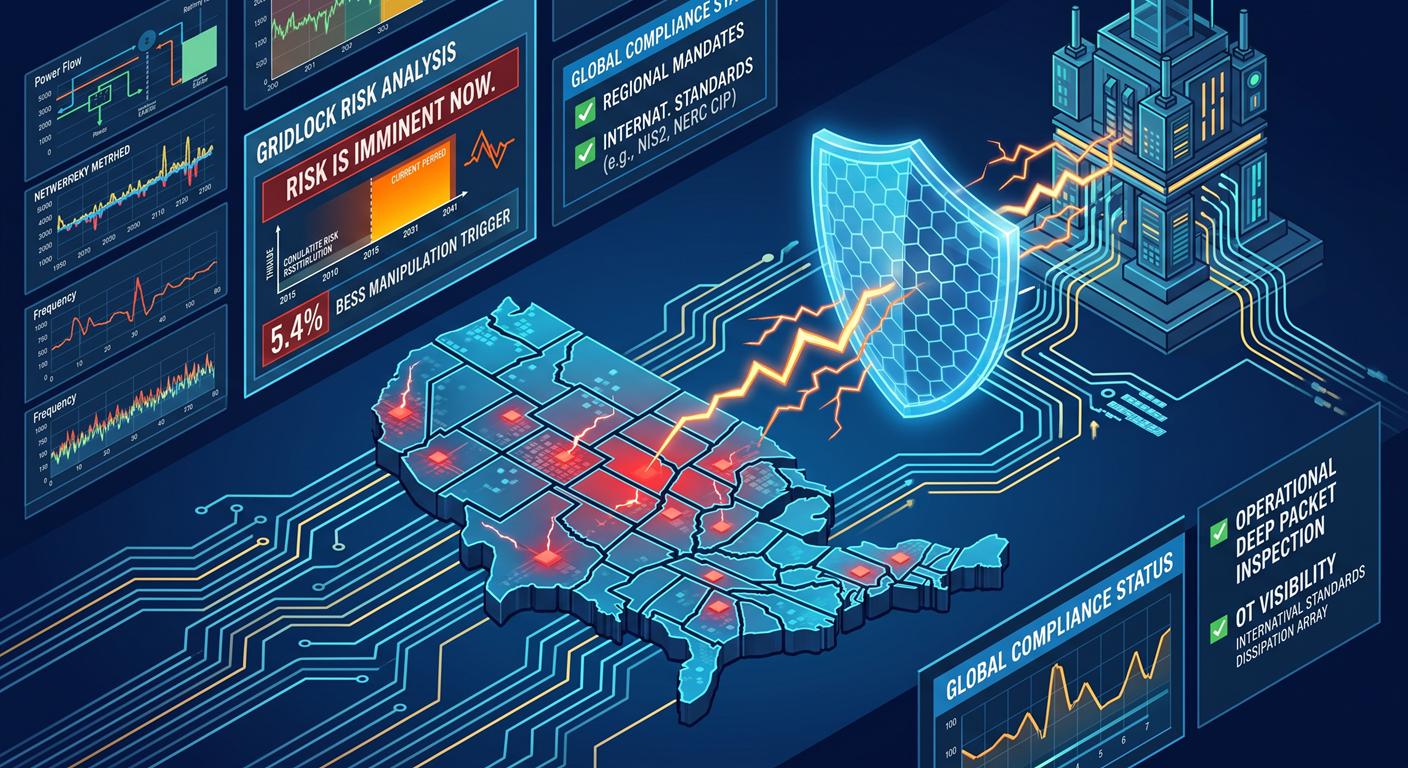
The Autonomy Gap: Agentic AI and the "Shadow Grid"
Security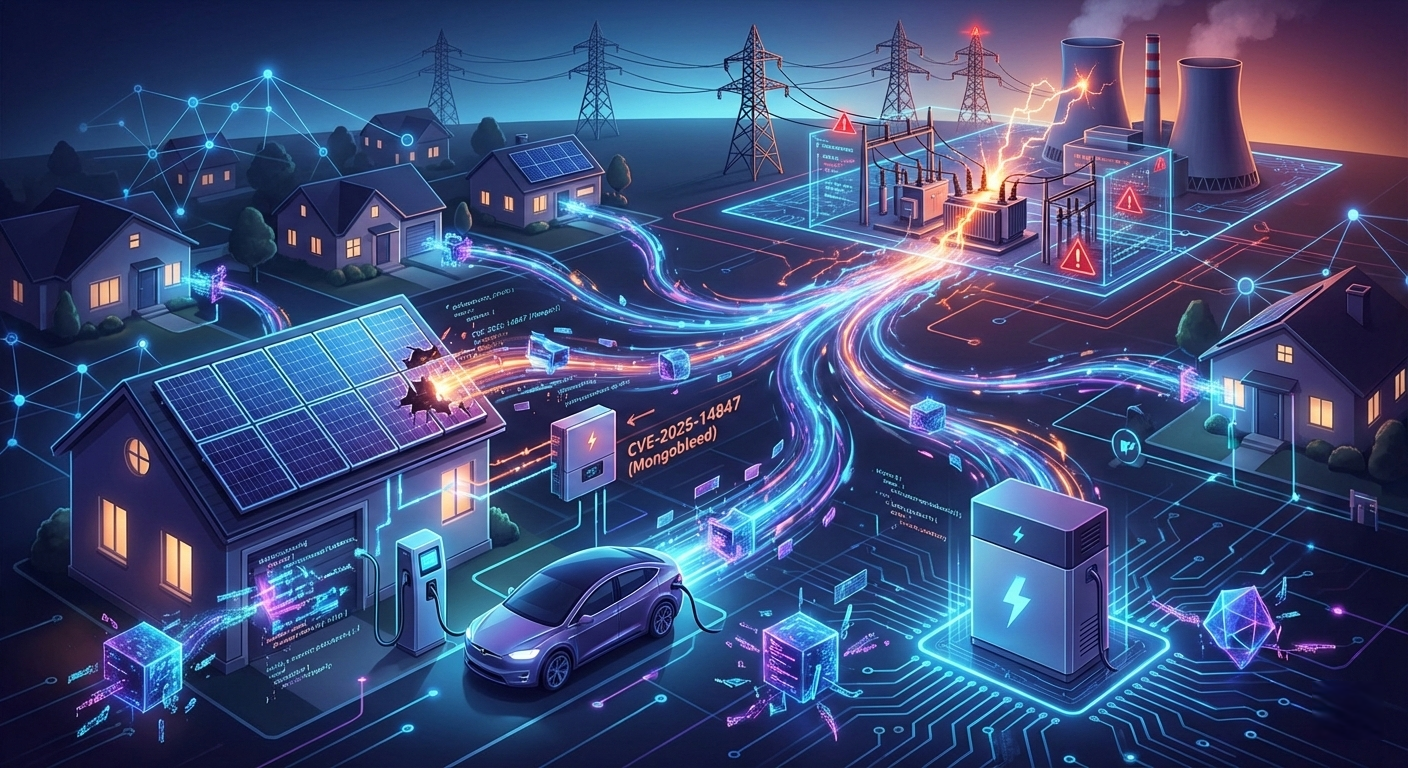
As we enter 2026, the cybersecurity community is no longer debating if AI will be weaponized, but how to stop its first truly autonomous generation. For years, critical infrastructure defense relied on the "Air Gap" or "Perimeter Defense" models. However, the rapid decentralization of the energy grid - through residential solar inverters, EV charging networks, and smart battery storage - has created what analysts now call the Shadow Grid.
This decentralized landscape is the perfect playground for a new, high-consequence threat: Agentic AI Attackers.
1. From Chatbots to Autonomous Agents
In 2025, we saw "Generative AI" used to craft perfect phishing emails. In 2026, the threat has evolved into Agentic AI. Unlike traditional malware that requires a Command-and-Control (C2) server to feed it instructions, these agents are "task-oriented."
An attacker can now deploy a "Scout Agent" into a utility network with a single prompt: "Identify all internet-facing IoT inverters with firmware older than v4.2 and pivot to the primary SCADA gateway." The agent then autonomously:
• Performs its own reconnaissance.
• Selects the best exploit (often using zero-day vulnerabilities like the recently disclosed Mongobleed CVE-2025-14847).
• Adapts its lateral movement based on real-time defensive responses.
2. The Technical Trigger: The "Mongobleed" Exploit
A key technical driver of this recent surge is the Mongobleed vulnerability (CVE-2025-14847), which hit its federal remediation deadline today, January 5, 2026. This flaw allows unauthenticated attackers to leak sensitive database fragments directly from server memory by exploiting length-parameter inconsistencies in compressed network messages.
For critical infrastructure, this is catastrophic. Many modern Industrial Control Systems (ICS) now use cloud-based "control planes" powered by MongoDB to manage thousands of remote sensors. An Agentic AI can use Mongobleed to silently scrape authentication tokens from these cloud planes, allowing it to "log in" to physical hardware rather than "breaking in."
3. Case Study: The "Solar DDoS" Risk
One of the most unique threats emerging this month is the Reverse-Grid Attack. Security researchers have identified that compromised green energy inverters - when synchronized by an AI agent - can be used to create massive power surges.
By rapidly oscillating the frequency of power fed back into the grid, these agents could theoretically cause a "cascading trip" of circuit breakers, leading to regional blackouts. This turns a household's contribution to climate goals into a distributed weapon against the grid itself.
In 2026, the "perimeter" is no longer a firewall; it is the identity of every single smart device connected to the grid.
4. The Defensive Shift: "In-Band" Behavioral Guardrails
How is the industry responding? Traditional signature-based antivirus is useless against an AI agent that rewrites its own code every ten seconds.
The new standard is Autonomous Defense. Security teams are deploying their own AI "Sentinels" that reside directly on the OT (Operational Technology) network. These Sentinels don't look for "bad code"; they look for "bad intent." If a solar inverter suddenly attempts to communicate with a database it has never accessed before, the Sentinel doesn't just alert a human - it physically isolates that segment of the grid in milliseconds.
The Paradigm Shift: A Snapshot of Evolution
To understand the gravity of the threat facing us in January 2026, we must look at how radically the attack model has changed in just twenty-four months. The shift from human-guided scripts to autonomous agents changes every fundamental metric of cyber defense.
Here is the new reality of the threat landscape:
1. Control Architecture
• Then (2023–2024): Attacks relied on human-led Command-and-Control (C2) servers providing step-by-step instructions.
• Now (2026): Agents operate using autonomous "Task-Logic," making their own decisions at the edge without needing to "phone home."
2. Operational Velocity
• Then: Lateral movement and exfiltration took hours or days, offering a window for intervention.
• Now: Execution happens in milliseconds and seconds, often faster than current SIEM logging can register.
3. Primary Targets
• Then: The focus was on big game hunting - centralized corporate databases and IT servers.
• Now: The target is the distributed edge - the millions of devices making up the "Shadow Grid."
4. The Weapon of Choice
• Then: Noisy attacks like ransomware (data encryption) and mass phishing campaigns.
• Now: Silent, surgical strikes using memory leaks (like the Mongobleed exploit) to scrape live authentication tokens.
Summary
The era of "slow" cyber warfare is over. As critical infrastructure becomes more connected and green, the attack surface expands into our very homes. The focus for 2026 must be "Identity-First Resilience" - treating every inverter, charger, and sensor as a potential entry point for an autonomous actor.