Race Against the Machine: What CISA’s New 72-Hour Patch Mandate Means for Grid Operations
Security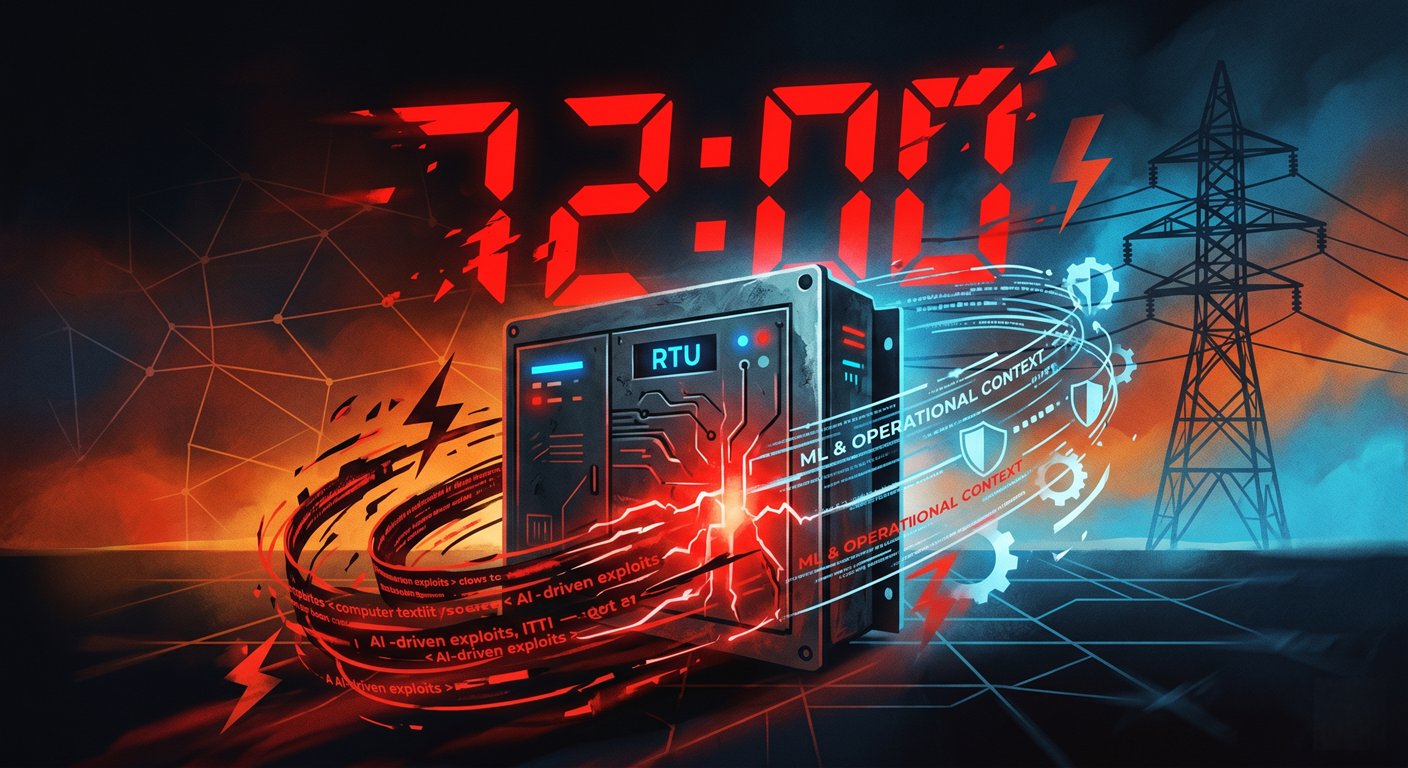
The clock just ran out on the old patch management playbook, and the federal government finally admitted it.
On June 10, 2026, CISA dropped Binding Operational Directive 26-04, hitting critical infrastructure operators with a tough new mandate: certain high-risk, internet-facing vulnerabilities must now be patched within a strict 72-hour window. The driving force behind this panic isn’t a secret anymore. Attackers are using advanced AI automation to turn software flaws into active weapons almost the instant they are discovered, closing the gap between a patch release and a real-world exploit to just a few hours.
But tucked inside the urgency of the directive was a fascinating warning for security teams. CISA explicitly noted that operators must verify whether a system has already been compromised before applying a patch, stating flatly that a patch generally does not kick out an embedded threat actor.
For the people keeping the lights on in the energy sector, this completely flips the script. It means the race isn’t just about who can update code faster; it’s about knowing exactly what is happening inside your operational technology (OT) before you touch a single machine.
Why IT Security Scores Fail the Grid
If utilities try to survive this new accelerated threat landscape by relying on standard IT security scores, operations will grind to a halt. Mass patching based purely on software version numbers ignores the fact that a critical vulnerability on a corporate laptop is a minor nuisance, while that exact same flaw on a Remote Terminal Unit (RTU) managing a high-load transmission substation is an immediate danger to grid stability.
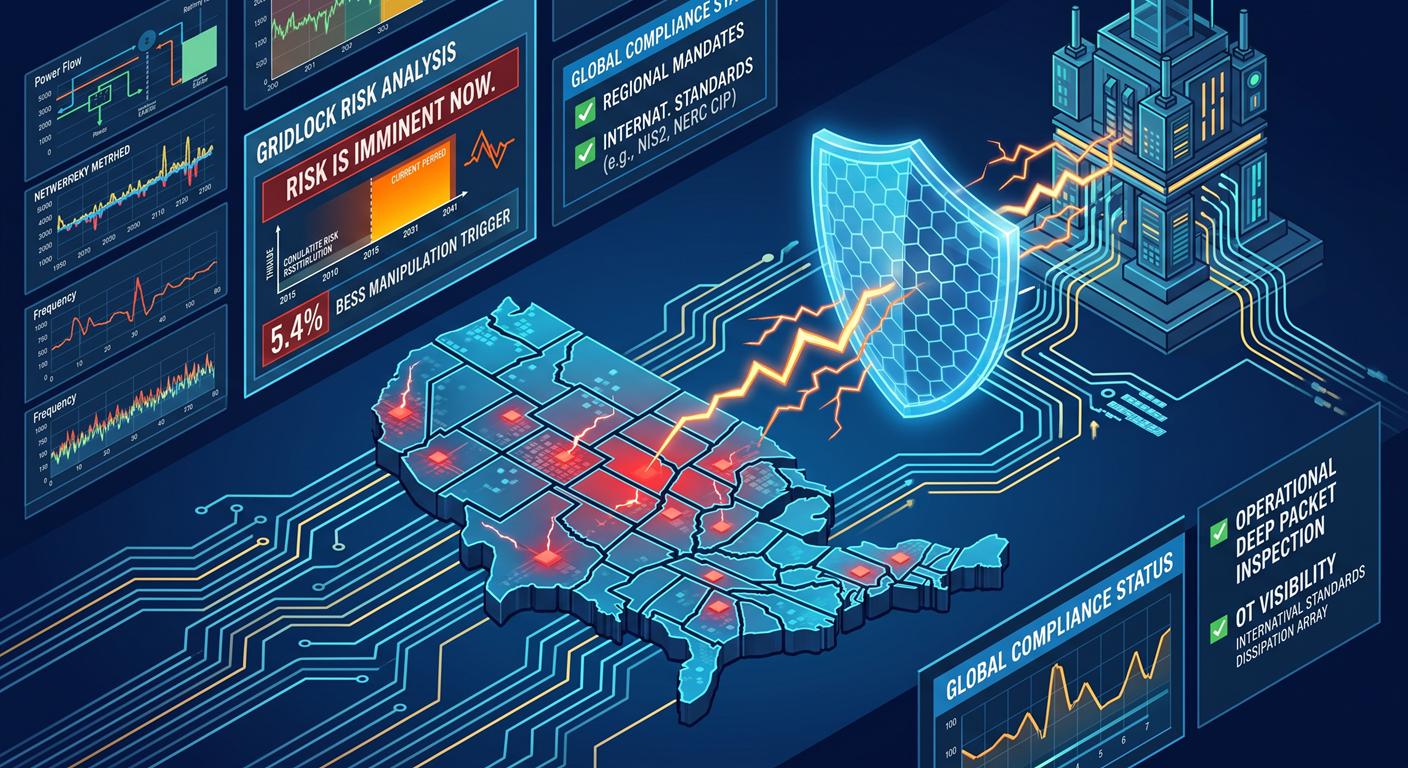
True resilience requires shifting the focus entirely to the operational and electrical context of the grid. Security decisions cannot be driven by generic IT metrics; they have to be rooted in power engineering realities. Prioritizing which assets to secure within that frantic 72-hour window depends entirely on understanding the specific operational role of each asset within the broader network. By mapping software vulnerabilities directly to the physical consequences on the grid, utilities can accurately identify which 1% of vulnerabilities pose an immediate systemic risk and which 99% can safely wait.
Defending the Grid with Machine Learning and Operational Context
As cyber threats become automated, the old way of relying purely on network boundaries or generic traffic alerts is no longer enough. To truly catch an adversary pre-positioning inside an engineering network, security systems must combine deep network behavior data with the actual operational and electrical context of the grid.
This is where machine learning becomes essential. By training machine learning models on specific industrial protocols, the system learns what normal engineering operations look like. Crucially, it blends this network data with an understanding of what the asset actually does - such as distinguishing between a normal breaker operation and an anomalous sequence that could destabilize a substation. When a threat actor attempts to manipulate telemetry or drop a malicious payload, the system instantly catches the deviation from the established baseline. This intelligent combination maps cyber activity directlyto real-world grid impact, giving operators the exact insights needed to stop a coordinated attack before it can cause physical damage.
When a vulnerability is announced, the system doesn't just check version numbers. It looks at the live traffic, queries device configurations, verifies firmware baselines, and flags anomalous telemetry to instantly see if a threat actor is already sitting silently inside the system using default credentials. This turns compliance from an administrative headache into automated, real-time proof that your environmentis clean.
Survival in the Age of Automated Attacks
As attacks become more automated, the immediate instinct of the tech world will be to fight automation with automation, building algorithmic security tools designed to instantly isolate networks or shut down processes at the first sign of trouble. But in a power grid, an uncoordinated, automated shutdown can trigger the exact cascading blackout you are trying to prevent.
Cyber-physical security must remain fiercely committed to a human-in-the-loop philosophy. The ultimate goal of sophisticated machine learning in the OT space isn’t to take control plane decisions away from the engineer, but to strip away the noise of an automated assault. Byserving up clean, context-rich operational data, the technology ensures that when the perimeter breaks, human operators have the clarity they need to make safe, calculated decisions and keep the physical world running.