The AI Revolution in Our Power Grids: Why the Hype Needs a Safety Check
Regulation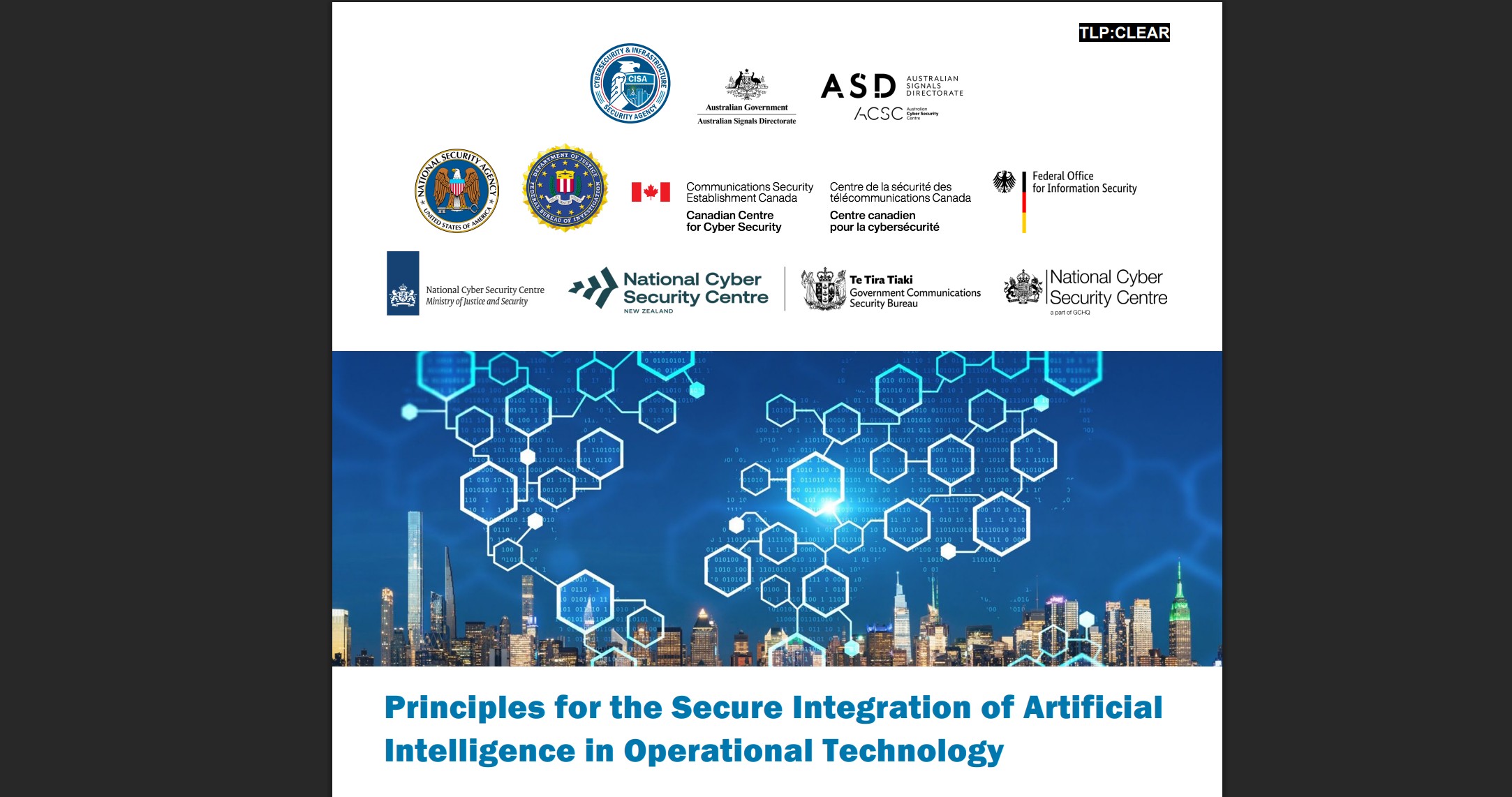
AI is changing everything, and the energysector is no exception. We’re already seeing massive potential for efficiencygains, far better predictive maintenance, and real-time optimization of powerflows. This digital shift is necessary, but it comes with a fundamental,high-stakes challenge:
The problem is that AI is probabilistic, butour Operational Technology needs to be deterministic.
The industrial control systems that form thephysical backbone of a power plant or grid must be 100% predictable: when youhit stop, the turbine must stop. When AI, with its inherent element of probabilityand data-driven guessing, is integrated into that deterministicenvironment, the margin for safety disappears.
This reality is why global security leaderslike CISA, the NSA, and their international partners just released landmarkguidance: a global playbook for integrating AI into Critical Infrastructuresecurely.
It’s a clear signal: the rush to deploy AImust be matched with extreme vigilance. At Argen Energy, we see this guidanceas the critical roadmap for the industry.
The TwoPhysical Risks Every Energy Executive Needs to Understand
The risk in OT isn't just about stolen data;it's about physical safety and service continuity. Two specific AI risks shouldbe top of mind:
- Adversarial Attacks and Data Poisoning: A bad actor can subtly feed falsified data into an AI model. By manipulating the input data, an attacker could trick an AI model managing a smart grid into overloading a transmission line, potentially causing a major blackout.
- Model Drift and Failsafe Confusion: AI models can become "confused" over time as real-world conditions change (a phenomenon called model drift). They can also experience "hallucination," leading to unreliable outputs. If a system starts generating excessive or false alarms, human operators can face "fatigue," start ignoring warnings, or hesitate to act on legitimate safety commands, costing critical time.
The FourPillars of Secure AI Integration
The new guidance provides a clear frameworkfor managing these risks. It's not about stopping AI adoption, but controllingit by treating AI like any other safety-critical industrial component.
1. Understand AI (The Education Phase) This is about getting comfortable with the uncomfortable truth: AI isnot a magic black box. Your teams need to be trained not just on how to use it,but on its unique failure modes - from prompt injection to model drift.
2. Consider AI Use in the OT Domain (TheBusiness Case) Don't use AI just because you can.Before deployment, you must have a solid business case and define clearsecurity parameters. This includes managing sensitive OT data security and demanding full transparency from vendors - includingtheir supply chain and the use of Software Bill of Materials (SBOMs) forthe AI models they provide.
3. Establish AI Governance and AssuranceFrameworks (The Guardrails) This is where structurecomes in. You need robust governance that integrates AI models into yourexisting security and risk frameworks. This means continuous testing,validation, and using controlled, simulated environments to verify modelperformance before it touches a live system.
4. Embed Safety and Security Practices (TheNon-Negotiables)
The most crucial takeaway: AI must never beallowed to make autonomous, safety-critical decisions without humanverification.
We need oversight mechanisms that maintaintransparency, provide clear logs, and establish safety thresholds. If the modeloutput exceeds those bounds, the system should automatically revert to a non-AIfailsafe or a "human-in-the-loop" mode.
Our View:Operationalizing the Framework
The new guidance shifts AI integration from anR&D project to a mission-critical security function. At Argen Energy, wespecialize in building the secure foundation for your AI-enabled OTenvironment.
- Proactive Network Visibility and Threat Detection: We deploy advanced solutions to monitor network communications across your OT environment, establishing a baseline of "normal" behavior to detect and alert on anomalous, AI-specific threats, such as manipulation attempts or unexpected network access by models.
- OT Data Security Risk Assessments & Governance: We thoroughly audit and implement governance policies for all Operational Technology data used in AI models, ensuring data integrity, mitigating poisoning risks, and enforcing data residency and usage requirements with third-party vendors.
- Develop AI-Specific Incident Response Playbooks: We integrate new AI failure modes (e.g., model manipulation, prompt injection, and hallucination) into your existing IR plans, ensuring your teams have clear, validated procedures for safely and rapidly reverting to deterministic control when an AI system is compromised.
Integrating AI can unlock unbelievable valuefor the energy sector, but only if we secure it with the rigor and respect thatour physical infrastructure demands.